PRINT INTERVIEWS AND MENTIONS (Selected)
Vanity Fair
October 2000.
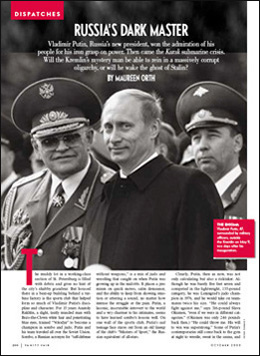
Russia’s Dark Master. (Excerpt)
Maureen Orth
"Chubais’s role in the U.S.-aid-to-Russia program has been incisively dissected in a controversial paper by University of Pittsburgh professor Janine Wedel, published in The National Interest: "The ideology, that of radical privatization and marketization, applied in this instance in a cold-turkey manner to a society with no recent experience of either, is well known. The way in which advice and aid were given is much less familiar." In June 1997, the U.S. Agency for International Development suspended funding to the chief funnel for U.S. assistance, the Harvard Institute for International Development, because two of its chief executives, Jonathan Hay and Andrei Schleifer, were accused of using inside knowledge and speculating in the Russian stock market through Hay’s girlfriend and Schleifer’s wife. Until that point, Wedel charges, U.S. aid to Russia was managed by a small cabal of Harvardites and a handful of Russians—namely Chubais—whom they felt comfortable with. Approximately $350 million was managed by the Harvard Institute for International Development, which, as Wedel says, left "it in the unique position of recommending U.S. aid policies while being itself a chief recipient of that aid." Members of the clique would often switch sides, with Americans helping to write Russian proposals and vice versa, the result of which was exploitation and embarrassment.
"A very small group of people acting as one were able to use the institutions at their disposal—the U.S. government, the Russian government, even the I.M.F.—to further their own agendas," Wedel tells me. "The [U.S.] economic-aid program has been a disaster largely because of this strategy." Wedel’s critics charge that her judgment is too harsh, that shock therapy has in fact worked in Poland. Not in Russia, however. "
On the web at Vanity Fair, October 2000.